Every autumn we get the same call in mid-November. The yard is already buried, the lawn underneath has not seen light in three weeks, and the caller wants to know how soon we can get there.
The honest answer is usually not as soon as they would like, because by mid-November everyone else has called too.
Leaf drop in Central Maryland is more predictable than most people think. Knowing roughly when it happens on your property makes the difference between a tidy autumn and a scramble.
The short version
In Howard County and the surrounding area, leaf drop generally runs from early October through early December, with the heaviest few weeks falling between late October and mid-November.
But that is the average across all trees. What matters is what is actually growing on your property, because the spread between the first tree to drop and the last is close to two months.
It depends on your trees
Early, late September into October. Ash and river birch go first, often while everything else still looks like summer. If you have walnuts you will know it, because they drop leaves, husks and twigs all at once and start earlier than anything else.
The main event, mid-October into early November. Maples, hickories, poplars and sweetgums. This is when most Central Maryland properties see the bulk of their leaf fall, and it is when a single cleanup starts to feel inadequate.
Late, November into December. Oaks, and there are a lot of oaks around here. Many hold their leaves well past the first frost, and some hang on to brown leaves right through winter. A property with mature oaks will still be dropping leaves in December, weeks after the maples have finished.
The ones that never quite finish. Beech and some young oaks keep dead leaves on their branches until spring pushes them off. There is nothing to be done about that, and nothing wrong with it.
Cooler nights, shorter days and the first hard frost all speed things up. A mild autumn stretches the season; a cold snap in late October can bring several weeks of drop down into one.
Why one cleanup is usually not enough
It is the most common mistake we see. Someone waits until they think the trees are finished, books a single cleanup, and then a second wave comes down the following week.
On a property with mixed mature trees, the leaves that fell in mid-October have had a month on the ground by the time the oaks finish. That is a month of a wet, matted layer sitting on grass that is trying to store energy for winter.
What that layer does to a lawn:
- Blocks light. Grass keeps photosynthesizing well into autumn. Covered grass cannot.
- Traps moisture. A wet leaf mat against turf through November and December is how snow mould and other fungal problems start.
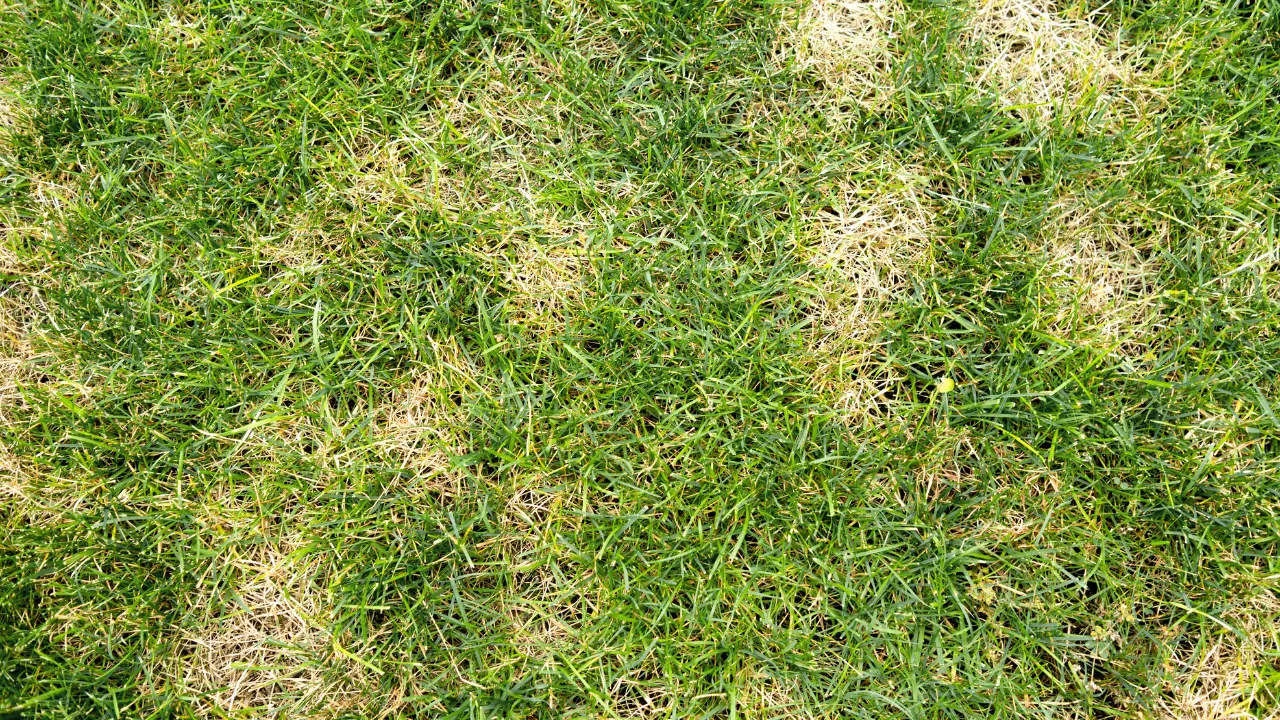
- Kills in patches. The damage shows in spring as bare, thin areas exactly where the leaves piled deepest, usually along fence lines and in low corners.
- Invites pests. Voles tunnel under leaf litter and chew through turf where nothing can see them.
Repairing that damage in spring costs considerably more than clearing the leaves would have.
So when should you book?
Book in September or early October. Not because the work happens then, but because the good dates go early. By the time the yard looks bad enough to prompt a call, every landscaper in Howard County has a full schedule.
Then match the service to your trees:
If your property is mostly maples and poplars, one thorough cleanup in early to mid-November usually does it.
If you have mature oaks, plan on two or three visits. One in early November for the main drop, one in early December once the oaks let go. Trying to do it in a single visit means either going too early and repeating it, or going too late and leaving the lawn covered for weeks.
If you are near woodland or an open common area, expect more than your own trees produce. Leaves blow. Properties bordering Columbia Association open space or wooded county land regularly deal with twice what their own canopy drops.
What about mulching them into the lawn?
It works, within limits.
A light scattering can be mown into the turf, where it breaks down and returns nutrients to the soil. That is genuinely good for a lawn and saves everyone the trouble.
The limit is roughly whether you can still see grass through the leaves. Once you cannot, mulching stops helping and starts smothering. Large flat leaves like sycamore and Norway maple mat together and do not break down quickly enough to be handled that way at all.
For most Central Maryland properties with mature trees, mulching handles the first light fall in October and is not sufficient after that.
A quick reference guide
| Period | What is happening | What to do |
| September | Nothing much yet | Book your services |
| Early October | Ash and walnut drop | Mulch light fall into the lawn |
| Late Oct - Mid Nov | Heaviest drop | First full cleanup |
| Late November | Oaks let go | Second visit, if you have oaks |
| December | The last of it | Final clearing before snow |
We can take it off your hands
We handle leaf removal across Ellicott City, Columbia, Clarksville, Elkridge, Catonsville, Halethorpe and the surrounding Howard County communities, and have done since 1991. Many of these are older neighborhoods with mature canopy, so we know which streets finish in November and which are still dropping at Christmas.
Whether you need one clearing or scheduled visits through the season, we can work out what your property actually needs. Autumn dates fill quickly. Get in touch and we will get you scheduled.